Skip to content

Cart

Your cart is empty

Article: Probiotics: Why the diversity of bacterial strains is important
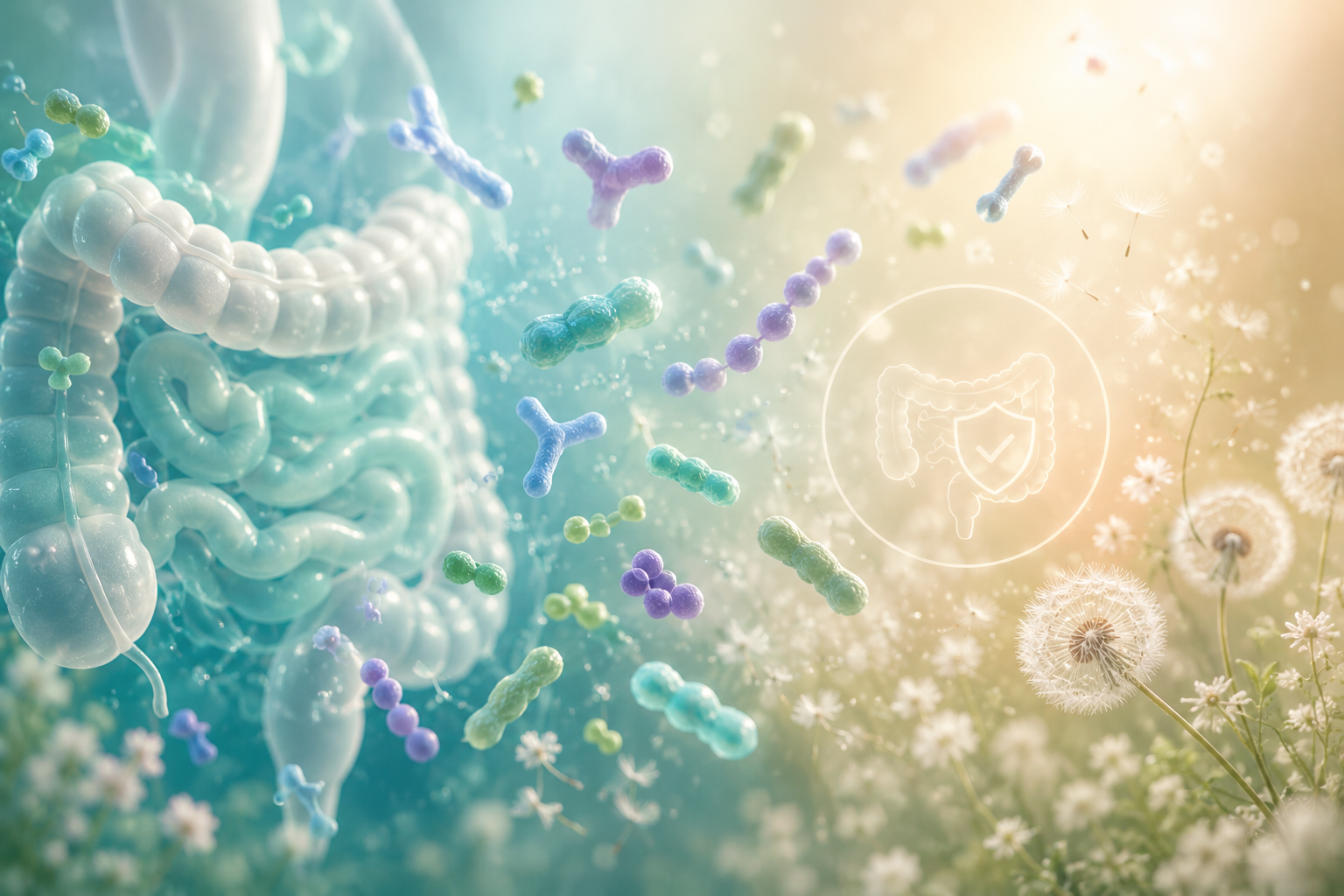
Titelbild mit stilisiertem Darm, verschiedenen Milchsäurebakterien und natürlicher Umgebung als Symbol für Probiotika, Mikrobiom und die Vielfalt der Bakterienstämme.
Darmmikrobiom

Probiotics: Why the diversity of bacterial strains is important

Anyone looking to buy a probiotic will quickly encounter major differences: some products contain only a few bacterial strains, while others combine numerous different cultures. But what really matters?

People with histamine intolerance or those following a histamine-conscious diet often pay close attention to the selection of bacterial strains included. In our article on gut health, we already described why the microbiome is an important topic for many affected individuals. But what are the actual differences between the various probiotics?

Why many probiotics today rely on great strain diversity

Anyone looking for a probiotic will quickly come across terms like multi-strain probiotic or broad-spectrum probiotic. While some products contain only a few bacterial strains, others combine numerous different cultures in one formula.

But why do many manufacturers pursue this approach? And are there situations where a deliberately reduced composition might make sense?

Illustration of the gut flora with diverse lactic acid bacteria and bifidobacteria around a stylized intestine – symbolic image for probiotics, microbiome, and strain diversity.

What is a broad-spectrum probiotic?

Broad-spectrum probiotics are probiotics that combine several different bacterial strains. These often come from different bacterial genera such as Lactobacillus and Bifidobacterium.

The idea behind it is simple: the human gut flora also consists of a multitude of different microorganisms. Modern formulas are therefore often based on this natural diversity and combine several carefully selected cultures.

Every bacterial strain is unique

Not every bacterial strain is the same.

Even within a bacterial species, there are numerous different strains that differ genetically from one another. This is why scientific publications usually describe not just the bacterial species, but the individual strains themselves.

For this reason, many high-quality probiotics do not rely on a single culture, but on a combination of different lactic acid bacteria.

More strains do not automatically mean better quality

Greater strain diversity is an understandable approach – however, it alone says nothing about the quality of a product.

Equally important are, among other things:

  • the selection of the bacterial strains used,
  • a well-conceived combination of cultures,
  • the amount used,
  • gentle manufacturing processes,
  • the stability of the cultures until the end of their shelf life.
Infographic on the quality of probiotics: The number of bacterial strains alone does not determine quality – the selection of strains, the formula, manufacturing, and the stability of the cultures are what matter.

A good probiotic is therefore characterized by the quality of its formula – not just by having the highest possible number of bacterial strains.

Our approach: HISTAmed® Probio

With HISTAmed® Probio and HISTAmed® Probio sensitiv, we follow the multi-strain probiotic approach: a carefully compiled combination of selected lactic acid cultures that are proven not to produce histamine.

HISTAmed® Probio combines several selected lactic acid cultures with resistant corn dextrin as a fiber source and is available as a powder.

HISTAmed® Probio sensitiv also contains selected lactic acid cultures but uses microcrystalline cellulose as a carrier and contains no prebiotic fibers. The formula is available in capsule form, offering an alternative for those who prefer capsules or a composition without prebiotics.

This allows users to choose the variant that best suits their personal preferences and daily routine.

Conclusion

Many modern probiotics today rely on a combination of different bacterial strains. This approach is based on the natural diversity of the gut flora and explains why so-called broad-spectrum or multi-strain probiotics are widespread today.

With HISTAmed® Probio and HISTAmed® Probio sensitiv, HISTAmed® offers two variants with carefully selected lactic acid cultures. Depending on personal preference, users can choose between a powder formula with prebiotic fiber or a capsule formula without prebiotics. Both products are part of our product range geared towards histamine-conscious people, focusing on histamine, gut health, and histamine management.
 

DAO explained simply

Literature

[1] "Histamine – Wikipedia". Accessed: October 11, 2023. [Online]. Available at: https://de.wikipedia.org/wiki/Histamin

[2] M. at DocCheck, "Biogenic amine", DocCheck Flexikon. Accessed: October 11, 2023. [Online]. Available at: https://flexikon.doccheck.com/de/Biogenes_Amin

[3] "Histamine and histamine metabolism - an overview | FETeV". Accessed: October 13, 2023. [Online]. Available at: https://fet-ev.eu/histamin/

[4] O. E. Guttentag, "Histamine and histamine-like substances in the blood", Naunyn-Schmiedebergs Arch. Exp. Pathol. Pharmakol., vol. 162, no. 6, pp. 727–738, Nov. 1931, doi: 10.1007/BF01864146.

[5] O. B. Reite, "Comparative physiology of histamine", in Physiological reviews, 1972, pp. 778–819. [Online]. Available at: https://doi.org/10.1152/physrev.1972.52.3.778

[6] "Pseudoallergies". Accessed: October 24, 2023. [Online]. Available at: https://www.allergiezentrum.org/de/allergien/pseudoallergien

[7] C. A. Akdis and F. E. R. Simons, "Histamine receptors are hot in immunopharmacology", Eur. J. Pharmacol., vol. 533, no. 1–3, pp. 69–76, March 2006, doi: 10.1016/j.ejphar.2005.12.044.

[8] E. K. Roßbach, "INAUGURAL – DISSERTATION to obtain the degree of Doctor of Veterinary Medicine - Doctor medicinae veterinariae - (Dr. med. vet.)".

[9] I. Mota, W. da SILVA, and J. F. Fernandes, "The inhibition of mast cell damage and histamine release in anaphylaxis by pyridine and diphosphopyridine nucleotidase inhibitors. Comparison with compound 48/80", Br. J. Pharmacol. Chemother., vol. 15, no. 3, pp. 405–409, Sep. 1960, doi: 10.1111/j.1476-5381.1960.tb01263.x.

[10] "Benzodiazepines, hypnotics, hypnotica, sedatives, sedative, hypnotic, chemistry". Accessed: October 31, 2023. [Online]. Available at: http://www.welt-der-wappen.de/Apotheke/Hypnotica/hist.htm

[11] "BIOCHEMICAL TREATMENT: MEDICINES FOR THE NEXT CENTURY". Accessed: October 26, 2023. [Online]. Available at: http://superiorsites3.com/NNS91BiochemTreatment.htm

[12] R. Jarisch, Histamine intolerance - Histamine and seasickness. Georg Thieme Verlag, 2013.

[13] "Histamine receptors". Accessed: October 13, 2023. [Online]. Available at: https://www.spektrum.de/lexikon/biologie/histaminrezeptoren/32036

[14] W. F. Ganong, Textbook of Medical Physiology: Human Physiology for Medical Students and Physicians, 4th rev. ed. Berlin [u.a.]: Springer, 1979. [Online]. Available at: https://ubdata.univie.ac.at/AC00290534

[15] "Histamine intolerance - diagnosis and treatment", Health Portal. Accessed: October 13, 2023. [Online]. Available at: https://www.gesundheit.gv.at/krankheiten/stoffwechsel/nahrungsmittelunvertraeglichkeit/histaminintoleranz.html

[16] "Causes of hives". Accessed: November 9, 2023. [Online]. Available at: https://www.nesselsuchtinfo.de/ursachen/mastzellen-histamin

[17] D. T. Weigl, "DoktorWeigl explains histamine & histamine intolerance.", DoktorWeigl. Accessed: November 10, 2023. [Online]. Available at: https://www.doktorweigl.de/krankheiten/histamin-histaminintoleranz-ursachen-symptome-therapie-586/

[18] E. Beubler, ed., "Histamine, serotonin and eicosanoids", in Compendium of Pharmacology: Common Drugs in Practice, Vienna: Springer Vienna, 2007, pp. 41–48. doi:10.1007/978-3-211-72333-3_9.

DISCOVER MORE ARTICLES ON HISTAMINE INTOLERANCE, NUTRITION, GUT HEALTH, AND A CONSCIOUS LIFESTYLE.

MORE KNOWLEDGE FOR YOUR WELL-BEING

Frisches Obst, Gemüse, Nüsse und Samen als natürliche Quellen für Vitamine, Mineralstoffe und Co-Faktoren für eine ausgewogene Ernährung und einen normalen Stoffwechsel.
Supplements

Co-factors – why vitamins and minerals are essential for metabolism

Vitamins and minerals are essential co-factors that support numerous enzymes in their work and are involved in important metabolic processes. Find out what roles micronutrients like vitamin B6, vit...

Read more